
Somewhere between the pitch deck that promised guaranteed leads and the dashboard that shows 40,000 impressions and three form fills, most B2B founders hit the same wall. The ad spend is going out. The revenue isn’t coming in, and every agency call ends with a variation of the same sentence: The algorithm just needs more time to learn.
If that sounds familiar, the problem probably isn’t your budget. It’s rarely even your creative. In 2026, the businesses still bleeding money on ads that don’t convert are almost always missing the same three things: a clear picture of buyer intent, a content foundation that supports the ad, and a system for continuously optimizing rather than setting and forgetting. Let’s fix all three.
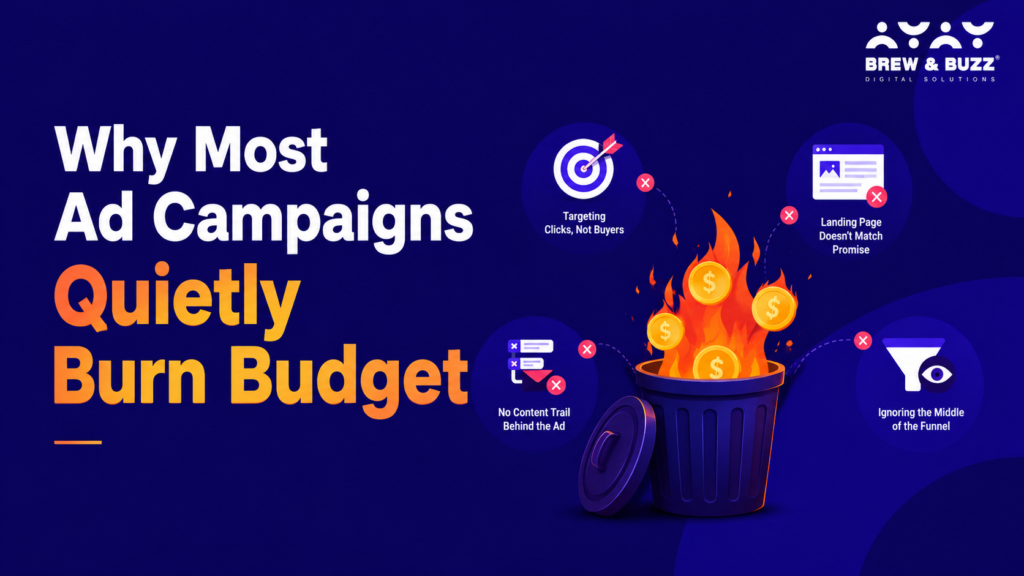
Why Most Ad Campaigns Quietly Burn Budget
Before jumping to solutions, it’s worth being honest about where the money actually leaks. In our work running performance marketing services for manufacturers, exporters, and B2B firms, the same patterns show up over and over:
- The ad is targeting a click, not a buyer. Broad targeting brings in volume, but volume without intent just inflates your cost per lead.
- The landing page doesn’t match the ad’s promise. A prospect clicks expecting one thing and lands on generic homepage copy — and bounces.
- There’s no content trail behind the ad. Cold traffic hitting a sales pitch with zero context converts far worse than traffic that’s already seen your name once or twice.
- Nobody’s watching the middle of the funnel. Teams obsess over click-through rate and ignore what happens after the click — where most of the actual money is lost.
None of these are creative problems. They’re strategy problems. And strategy problems need a strategy fix, not a bigger budget.
Start With the Audience, Not the Ad
The biggest shift in effective performance marketing heading into 2026 is a move away from channel-first thinking toward audience-first thinking (here’s exactly who we’re trying to reach, and here’s where they already are in their decision). It sounds like a subtle difference. In practice, it changes everything about how a campaign is built. An audience-first approach starts by mapping out real buyer segments, not broad job titles, but specific roles with specific problems.
A procurement head evaluating three vendors behaves nothing like a founder researching a category for the first time. Treating them the same in an ad campaign is why so much spend goes nowhere. Once those segments are clear, the question changes from “what ad should we run?” to “what does this specific person need to see, at this specific stage, to move forward?” That question is what search intent mapping is designed to answer.
Search Intent Mapping: Matching Content to What Buyers Actually Want
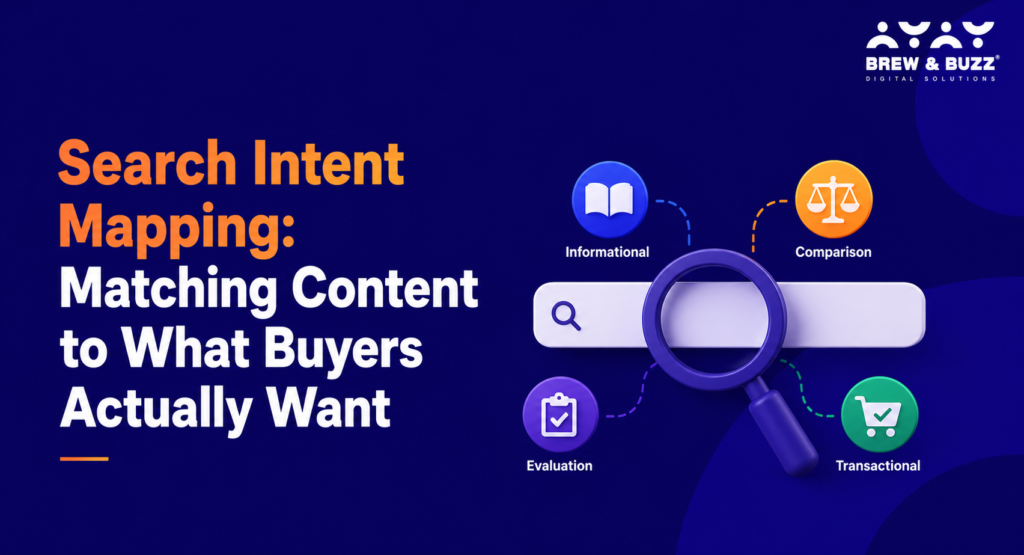
Search intent mapping is the practice of sorting every keyword, query, or buyer question into one of a few buckets: informational, comparison, evaluation, or transactional, and then building content or ad experiences that match. It’s a simple idea that most campaigns still get wrong, because it’s easier to write one generic ad than to build a matched experience for each stage of intent.
Here’s what that mapping typically looks like for a B2B brand:
- Informational intent — what is [category] and why does it matter — is best served by educational blog content, not a hard-sell ad.
- Comparison intent — [category] vs alternative or best [category] for X industry — needs comparison pages and proof points, not a generic landing page.
- Evaluation intent — [brand] reviews or [service] pricing — this is where case studies and transparent pricing pages earn trust.
- Transactional intent — [category] near me or get a quote for [service] — this is the only stage where a direct-response ad with a strong CTA actually makes sense.
When ad spend is aimed at transactional-intent keywords or lookalike audiences without any of the earlier-stage content supporting it, you’re essentially asking cold strangers to make a purchase decision on the first interaction. Search intent mapping fixes that mismatch before a single rupee is spent on media.
Why Content Clusters Make Paid Ads Work Harder
A content cluster is a group of related pages: one core pillar page and several supporting articles built around a topic your buyers actually search for. On their own, clusters are an SEO play. Paired with paid media, they become a conversion multiplier.
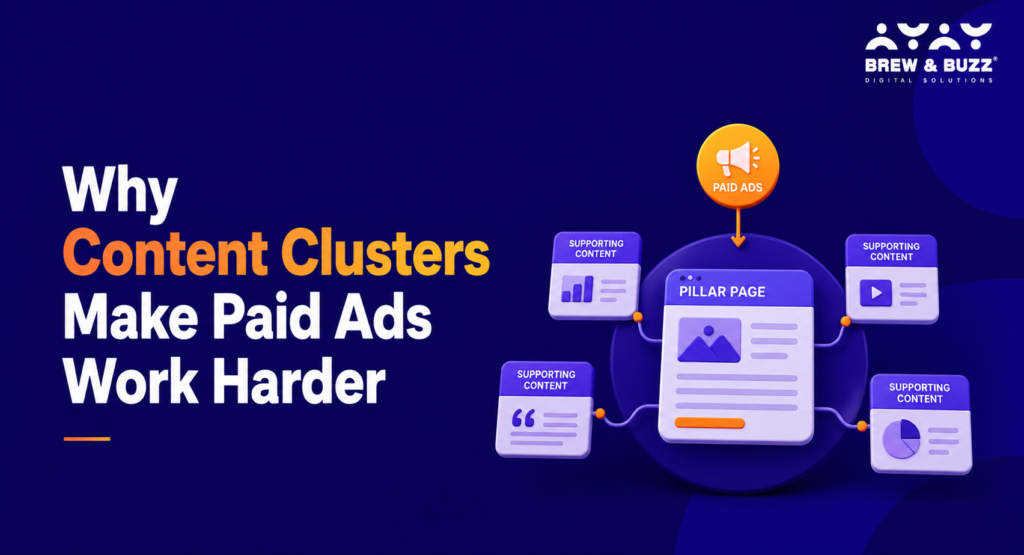
Here’s the mechanism: when a prospect clicks a cold ad and lands on a page that’s clearly part of a bigger, well-organized body of expertise, internal links to related guides, a clear pillar page, and supporting data trust build faster than they would from an isolated landing page. That trust is what turns a form fill into an actual sales conversation instead of a throwaway lead.
For a performance marketing program to hold up in 2026, the content cluster and the ad campaign need to be built together, not as separate workstreams. The cluster earns organic visibility and builds credibility. The ads accelerate reach to the same intent-matched audience. Run in isolation, each does half the job.
Using AI-Assisted Research Without Losing the Human Edge
AI tools have changed how quickly a team can research a market — but they’ve also made it easy to publish content that reads like it was written by nobody in particular. The brands winning with performance marketing services in 2026 use AI for what it’s actually good at and keep humans in charge of everything else.
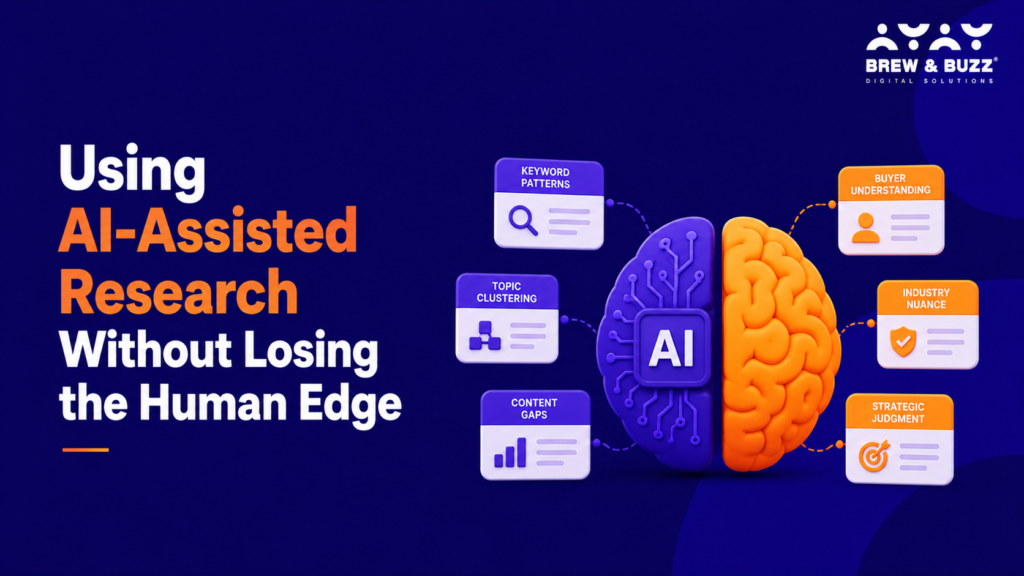
Where AI genuinely helps: surfacing keyword and query patterns at scale, clustering topics faster than manual research allows, drafting first-pass outlines, and spotting content gaps competitors haven’t covered. Where it still falls short: understanding a specific buyer’s actual objections, writing with real industry nuance, and making judgment calls about which trends are worth chasing and which are noise.
The practical approach is a hybrid one — AI handles the heavy lifting of research and pattern-spotting, and a strategist shapes that research into content and campaigns that sound like they were written by someone who’s actually sold to this audience before. Skip the human layer, and the content reads generically. Skip the AI layer, and research takes three times as long for a fraction of the coverage.
Campaign Optimization Is a Process, Not a Setting
This is where most wasted ad spend actually gets recovered or doesn’t. Ongoing campaign optimization is the difference between a campaign that improves month over month and one that plateaus at “acceptable” and stays there. A few practices worth building into any performance marketing program:
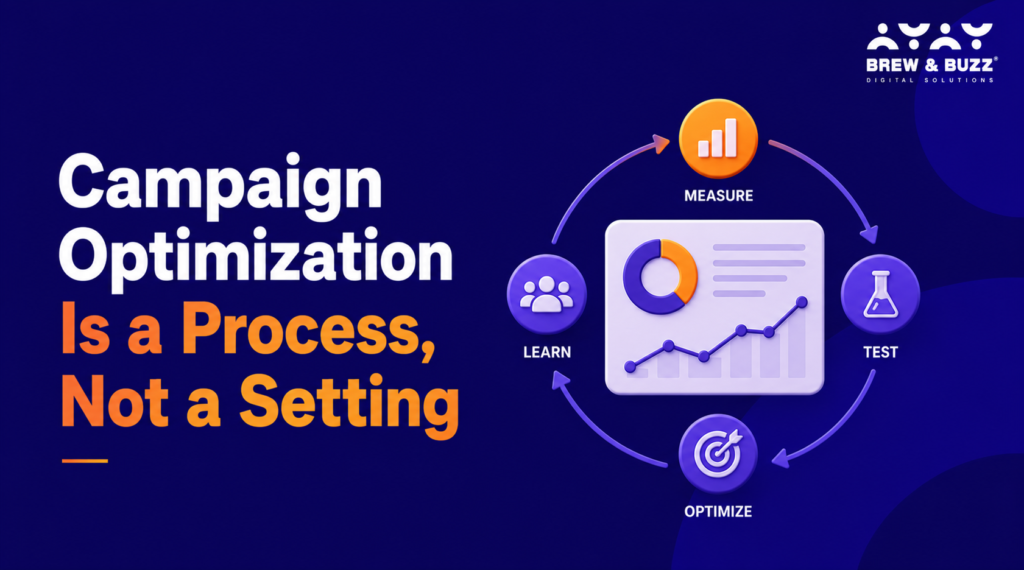
- Review cost-per-qualified-lead, not just cost-per-click. Cheap clicks that don’t turn into real conversations are still wasted spend, just spread thinner.
- Test landing pages as hard as you test ad creative. Most teams A/B test headlines and images but leave the landing page untouched for months.
- Segment performance by intent stage, not just by channel. A campaign might be crushing it with comparison-intent traffic and quietly failing with cold, informational-intent traffic — averaged together, that nuance disappears.
- Set a monthly optimization cadence. Weekly is often too reactive to see real patterns; quarterly is too slow to catch problems early. Monthly reviews, tied to pipeline data rather than vanity metrics, tend to strike the right balance.
Conversion Rate Optimization: Where the Real Money Is Recovered
Here’s an uncomfortable truth: most businesses could cut their ad budget in half and generate more leads simply by fixing what happens after the click. Conversion rate optimization doesn’t get the attention that campaign targeting does, but it’s usually the highest-leverage fix available.
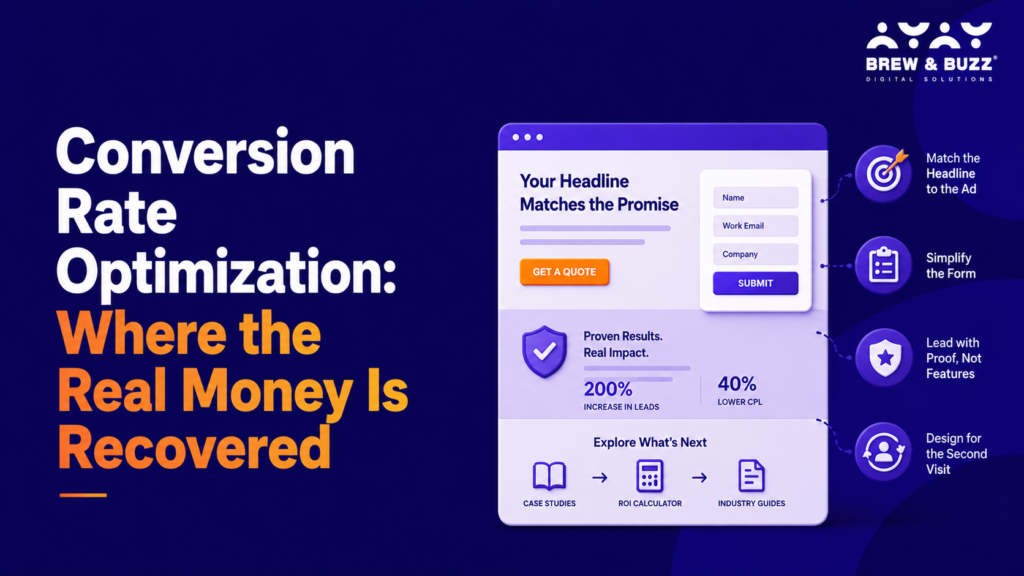
A few starting points that consistently move the needle for B2B landing pages:
- Match the headline to the ad exactly. Any gap between what was promised and what’s shown creates hesitation — and hesitation kills conversion.
- Cut the form down to what you actually need at this stage. A ten-field form is a great way to filter out serious buyers along with everyone else.
- Lead with proof, not features. A specific result — a client name, a number, a before-and-after — earns more trust in five seconds than a paragraph of feature copy.
- Design for the second visit, not just the first. Most B2B buyers don’t convert on their first touch. A retargeting sequence and a clear next step (a case study, a calculator, a short guide) keep the conversation alive instead of losing them entirely.
Bringing It All Together for 2026
None of this requires a bigger budget — it requires a tighter system. An audience-first strategy tells you who you’re actually talking to. Search intent mapping tells you what they need to see and when. Content clusters give your ads something credible to land on. AI-assisted research speeds up the groundwork without hollowing out the message. Ongoing campaign optimization and conversion rate optimization make sure the whole system gets better every month instead of quietly leaking money.
Ads that don’t convert aren’t usually a sign to spend less. They’re a sign the strategy underneath the spend needs rebuilding. Fix that, and the same budget starts working a lot harder.
If you’re ready to stop guessing and start running performance marketing services built around real buyer intent, that’s exactly the kind of rebuild we do for B2B teams every day.
Frequently Ask Questions
Performance marketing services focus on measurable outcomes such as leads, sales, and return on ad spend (ROAS). Businesses only evaluate success based on results rather than impressions or clicks.
Campaign optimization is the ongoing process of improving advertising performance by refining audiences, keywords, creatives, bidding strategies, and budgets to increase conversions while reducing costs.
Conversion rate optimization (CRO) helps turn more website visitors into customers. By improving landing pages, user experience, and calls-to-action, businesses can increase sales without increasing ad spend.
AI assists with audience research, search intent analysis, content clustering, predictive insights, bid optimization, competitor analysis, and personalization, helping marketers make faster and more informed decisions.
Yes. Combining SEO with paid advertising creates a stronger digital marketing strategy. High-quality content attracts organic traffic, supports ad campaigns, builds trust, and improves overall conversion rates, leading to better long-term ROI.