
The textile industry has always been strong offline—relationships, referrals, exhibitions, and long-term contracts. But when it comes to the digital world, many textile manufacturers feel stuck.
You might have a great product, competitive pricing, and solid production capacity… yet your website isn’t generating leads, and your inbox stays quiet.
So what’s going wrong?
Let’s break it down in a simple, real-world way
Contents
- The Real Problem: Digital Presence ≠ Digital Results
- Top Reasons Textile Manufacturers Struggle Online
- Data Insight: Why Online B2B Fails (and How to Fix It)
- What Smart Textile Businesses Are Doing Differently
- Simple Action Plan to Start Getting B2B Clients Online
- FAQs
- Our Thought
The Real Problem: Digital Presence ≠ Digital Results
Most textile manufacturers believe that
“If we build a website, clients will come.”
Unfortunately, that’s not how b2b marketing works.
In B2B, especially in industries like textiles, buyers take time. They research, compare, validate, and only then reach out.
If your online presence doesn’t guide them through that journey, you lose them.
Top Reasons Textile Manufacturers Struggle Online
- No Clear B2B Marketing Strategy
Many businesses jump into digital without a proper plan.
They post randomly on LinkedIn, run ads without targeting, or just rely on a basic website.
A strong b2b marketing strategy should answer:
- Who is your ideal client?
- What problems do they face?
- Where do they spend time online?
- What content builds trust?
Without this clarity, marketing becomes guesswork.
2. Website That Looks Good But Doesn’t Convert
Most textile websites
- Only show products
- Lack clear messaging
- Don’t have strong CTAs (Call-To-Actions)
A buyer doesn’t just want “fabric details.” They want
- Certifications
- Use cases (industries served)
- Trust signals
- Easy inquiry options
3. No Focus on B2B Lead Generation
Getting traffic is one thing. Getting qualified leads is another.
This is where many fail.
They don’t:
- Use lead magnets (catalogs, samples, brochures)
- Capture emails properly
- Follow up with prospects
That’s why many businesses now partner with b2b lead generation companies to build a consistent pipeline.
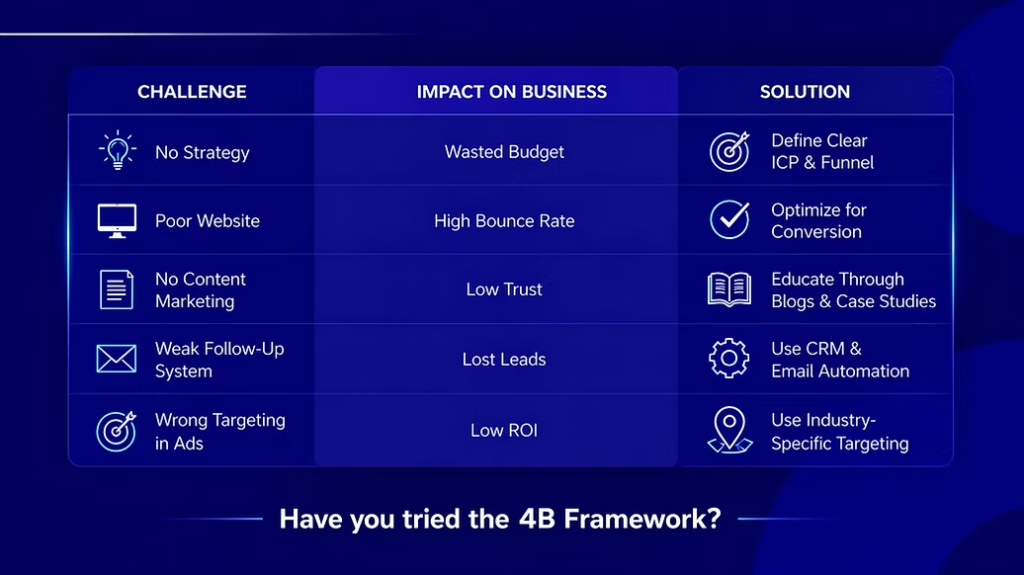
Data Insight: Why Online B2B Fails (and How to Fix It)
4. Lack of Industry-Specific Content
Textile buyers search for things like
- “Best fabric for export quality garments”
- “Reliable textile manufacturers in India”
- “Bulk fabric suppliers with certifications”
If your website doesn’t answer these questions, you’re invisible.
Content = Trust in b2b marketing
Example Content Ideas
- Behind-the-scenes of manufacturing
- Quality testing process
- Client success stories
- Fabric comparison guides
5. Relying Only on Offline Channels
Trade shows and referrals are great—but not scalable.
Today’s buyers:
- Google before contacting
- Check LinkedIn profiles
- Compare multiple suppliers online
If you’re not visible digitally, you’re losing deals before the conversation even starts.
6. No Proper Lead Nurturing System
Even if you get leads, what happens next?
Most textile manufacturers
- Don’t follow up consistently
- Don’t educate prospects
- Don’t build long-term relationships
This is where structured b2b marketing funnels come in
- Email sequences
- Retargeting ads
- WhatsApp follow-ups
What Smart Textile Businesses Are Doing Differently
Successful manufacturers are
Investing in strong b2b marketing strategy
Working with specialized b2b lead generation companies
Creating valuable content (not just selling)
Building trust before pitching
Using LinkedIn + Google Ads effectively
Simple Action Plan to Start Getting B2B Clients Online
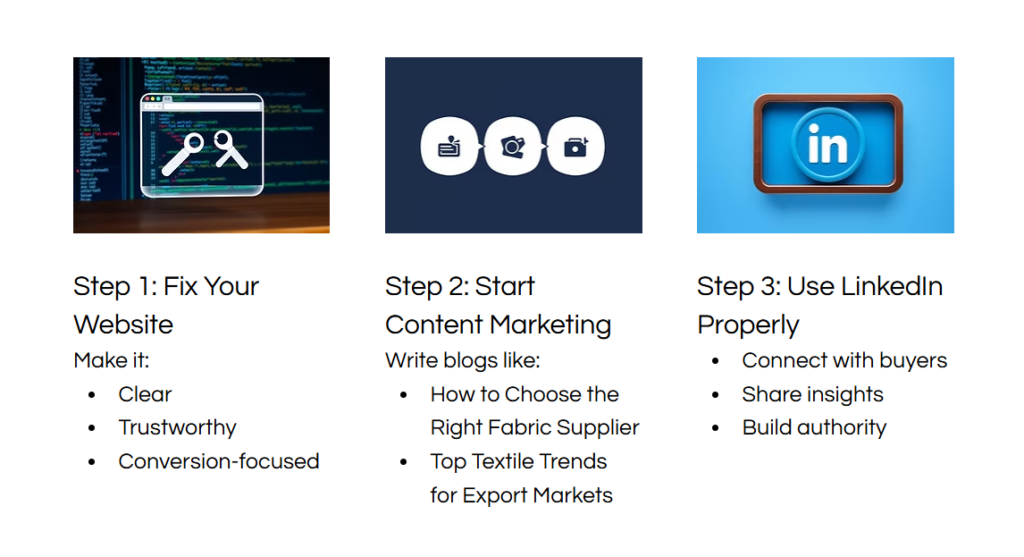
Step 1: Fix Your Website
Make it:
- Clear
- Trustworthy
- Conversion-focused
Step 2: Start Content Marketing
Write blogs like:
- How to Choose the Right Fabric Supplier
- Top Textile Trends for Export Markets
Step 3: Use LinkedIn Properly
- Connect with buyers
- Share insights
- Build authority
Frequently Ask Questions For Lead Generation
1. Why is B2B marketing difficult for textile manufacturers?
Because it requires strategy, patience, and trust-building—not just product promotion.
2. How long does it take to get B2B leads online?
Typically 3–6 months with the right b2b marketing strategy.
3. Should textile manufacturers invest in digital marketing?
Yes. Today, most buyers start their search online.
4. What platforms work best for textile B2B marketing?
- Google Search
- Industry marketplaces
5. Do I need a B2B lead generation company?
If you lack in-house expertise, working with b2b lead generation companies can speed up results and improve ROI.
Final Thought
Textile manufacturing is no longer just about production—it’s about positioning.
The companies that win today aren’t just the ones with the best fabric… They’re the ones that show up, build trust, and stay visible online.
If you fix your b2b marketing strategy using the 4B Framework, results will follow.