
The Real Problem Isn’t Demand — It’s Positioning
Let’s get one thing straight: There is no shortage of high-value B2B clients in the food industry.
From large retail chains and Hotels, Restaurants, and cafes/catering (HoReCa) buyers to exporters and private label brands—demand is booming.
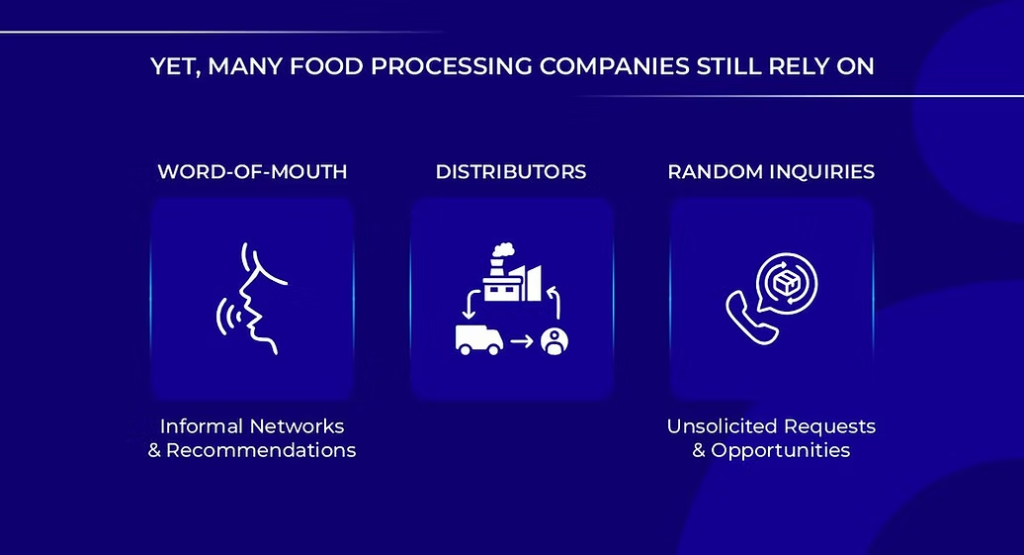
and then wonder why they’re stuck with low-margin, transactional buyers instead of long-term, high-value partnerships.
The gap?
Lack of structured B2B lead generation for food processing companies
What’s Actually Happening in the Market?
Here’s a simple reality
- Buyers are actively searching online
- Decision-making is now digital-first
- Trust is built before the first call
But most food processing brands are
- Invisible online
- Not present on the right B2B food marketplace
- Not communicating their value clearly
5 Reasons Food Processing Companies Miss High-Value B2B Clients
1. No Defined Ideal Customer Profile
Most companies try to sell to everyone.
But premium B2B clients look for
- Certifications (FSSAI, ISO, export compliance)
- Consistency
- Scalability
If your messaging isn’t tailored, you’re invisible to them.
2. Weak Digital Presence
If someone Googles your product and
- You don’t show up
- Your website looks outdated
- There’s no proof of work
You’ve already lost the deal.
3. No Structured Funnel
Many brands rely on
Inquiry aayi toh baat karenge.
But high-value clients don’t “inquire randomly.
They move through a journey
- Discover
- Evaluate
- Compare
- Decide
Without a funnel, you miss them in step 1 itself.
4. Ignoring B2B Food Marketplaces
Platforms like:
- Trade platforms
- Export directories
- Industry-specific portals
These are goldmines for serious buyers.
Yet, most companies either
- Don’t list
- Or create weak profiles
Result: Lost visibility in the B2B food marketplace ecosystem
5. No Trust-Building Content
High-ticket B2B deals require trust.
But most brands don’t create
- Case studies
- Factory videos
- Certifications showcase
- Product process transparency
Without this, you attract price-sensitive buyers only.
How to Attract High-Value B2B Clients (Step-by-Step)
Build a Strong Digital Foundation
- Professional website (clear positioning)
- SEO optimized pages
- Industry-specific landing pages
Create a B2B Lead Generation Funnel
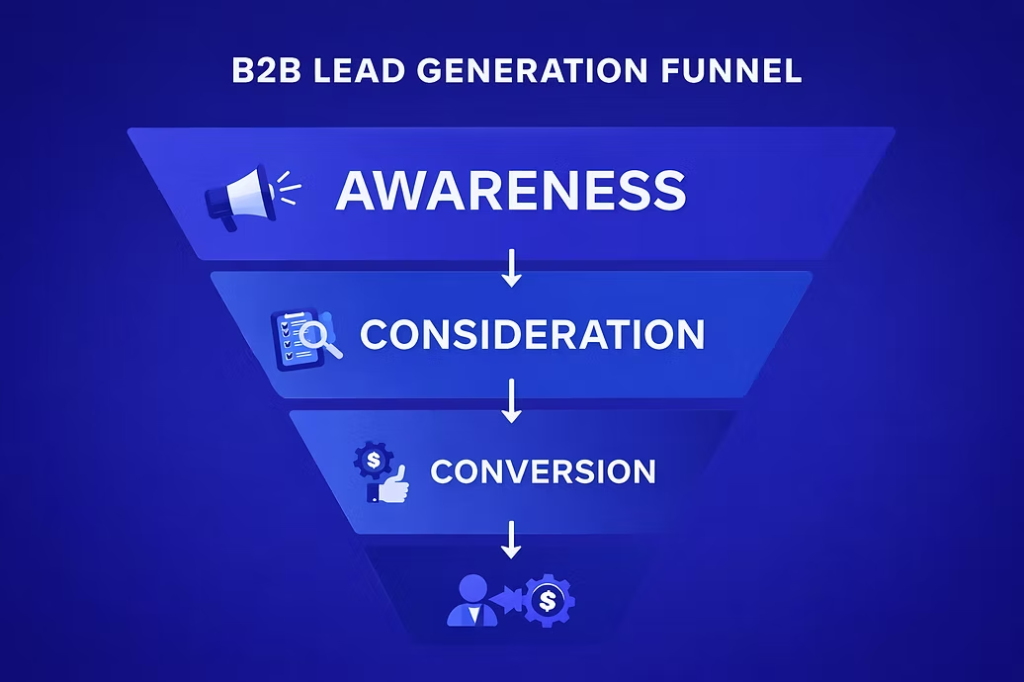
Example
- LinkedIn content →
- Website landing page →
- Lead magnet (catalog/sample request) →
- Sales call
Leverage B2B Food Marketplaces Properly
Don’t just list—optimize
- Product descriptions
- Certifications
- MOQ clarity
- Export capabilities
Treat your profile like a sales page, not a directory listing.
Invest in Content That Builds Authority
- How your product is made videos
- Industry insights
- Buyer guides
This builds Trust, Credibility, Premium positioning
Use Targeted Paid Campaigns
Run ads targeting
- Procurement heads
- Importers
- Retail chains
Platforms
This is where b2b lead generation marketing for food processing delivers scalable results.
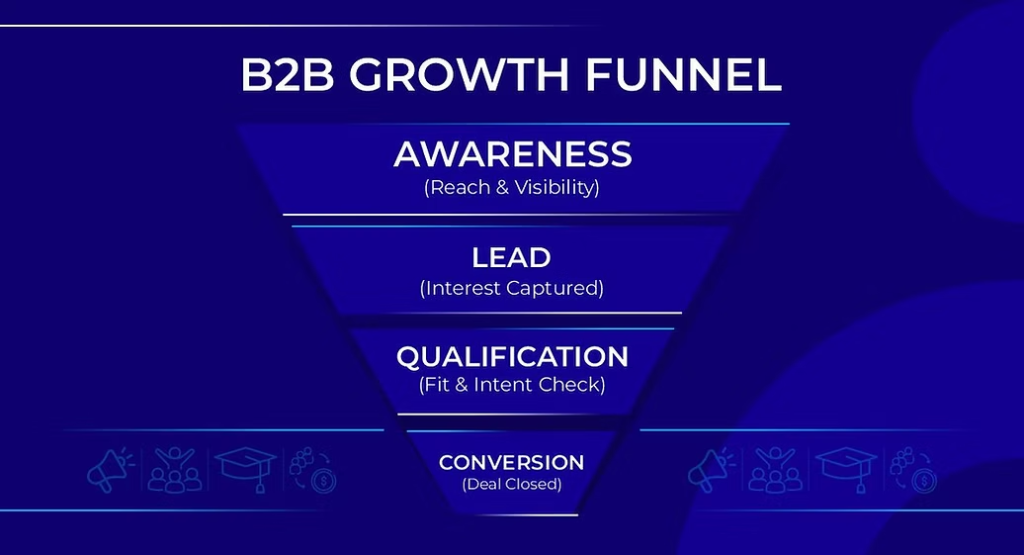
Real Insight
Companies that win high-value deals don’t just sell products. They sell
- Reliability
- Compliance
- Scalability
Your marketing should reflect that.
Frequently Ask Questions
What is B2B lead generation for food processing companies?
It is the process of attracting and converting business buyers (distributors, retailers, exporters) using digital strategies like SEO, ads, and marketplaces.
How can I get international B2B clients?
- Optimize your presence on a B2B food marketplace
- Use export-focused keywords
- Showcase certifications and logistics capability
Which platform works best for B2B lead generation?
- LinkedIn (for decision-makers)
- Google (for intent-based search)
- Marketplaces (for ready buyers)
Why am I getting only low-budget clients?
Because:
- Your positioning is weak
- No trust signals
- No premium branding
How long does B2B lead generation take?
Typically:
- 1–3 months for initial traction
- 3–6 months for consistent high-quality leads
Final Thoughts
If you’re a food processing company still relying only on offline channels, you’re not just missing leads
You’re missing high-value, long-term B2B clients
The opportunity is massive. But only for those who
- Show up digitally
- Build trust
- Follow a structured lead generation strategy