
The landscape of professional sales is shifting beneath our feet. Gone are the days when a spray-and-pray email campaign or a cold call script was enough to hit your quarterly targets. In 2026, the secret weapon isn’t just a bigger sales team—it’s a smarter one.
Artificial Intelligence (AI) has moved past being a buzzword. It is now the engine driving B2B LinkedIn marketing and redefining how we approach LinkedIn lead generation. If you’re still doing things the old way, you’re not just falling behind; you’re becoming invisible to your best prospects.
In this guide, we’ll explore how AI is actually changing the game, how to use it without sounding like a robot, and why human intuition matters now more than ever.
1. Beyond the Bot: The Real Impact of AI on Lead Gen
When people hear AI in marketing, they often think of chatbots. While chatbots are helpful, the real revolution is happening in Predictive Analytics and Hyper-Personalization.
Predictive Lead Scoring
In the past, marketing teams would collect thousands of leads and treat them all equally. This resulted in burned-out sales reps and low conversion rates. AI now analyzes historical data to tell you which lead is actually ready to buy.
It looks at intent signals—like how often they visit your pricing page or what specific whitepapers they download—and assigns a score. This ensures your team spends time on the top 5% of prospects who are most likely to convert.
Hyper-Personalization at Scale
We’ve all received those Hi [First_Name] emails that feel incredibly cold. AI has changed this. Modern tools can scan a prospect’s recent LinkedIn activity, read their latest annual report, and reference a specific pain point in a personalized message—all in seconds.
This level of B2B LinkedIn marketing makes the prospect feel seen, rather than targeted.
2. Transforming B2B LinkedIn Marketing
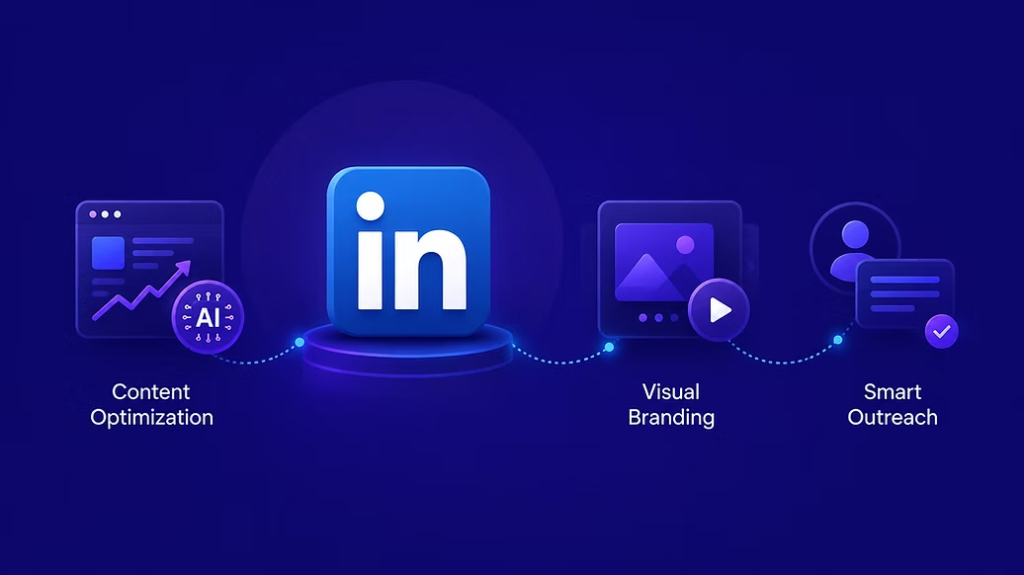
LinkedIn is the gold mine for B2B professionals, but it’s also a crowded one. AI helps you cut through the noise in three specific ways
Content Optimization
AI tools can now predict which topics will resonate with your specific niche. By analyzing millions of posts, these tools suggest the best headlines, the right time to post, and even the sentiment that is currently trending in your industry.
This takes the guesswork out of your content strategy.
Visual Branding
Engagement on LinkedIn is heavily driven by visuals. AI-driven design tools allow small teams to create professional-grade carousels and videos that look like they were made by a high-end agency.
This visual authority is a massive part of successful LinkedIn lead generation.
Smart Outreach
Automated outreach used to be a recipe for getting banned. Today, AI-powered LinkedIn tools mimic human behavior.
They send connection requests at irregular intervals and use natural language processing to ensure the message sounds like it came from a human peer, not a script.
3. The Human + AI Hybrid Model
The biggest mistake companies make is handing the keys entirely to the AI. Total automation leads to an uncanny valley effect where prospects can sense something is off. The winners in 2026 are using the Hybrid Model.
- The AI does the heavy lifting: Data scraping, initial research, and scheduling.
- The Human provides the soul: Final editing, strategic empathy, and closing the deal.
Think of AI as your Research Assistant and yourself as the Creative Director. The AI gives you the data, but you provide the perspective.
4. How AI Solves the Data Decay Problem
B2B data goes stale incredibly fast. People change jobs, companies merge, and titles shift. Manually keeping a CRM updated is a nightmare. AI-powered lead generation platforms use real-time web scraping to ensure your contact list is always accurate.
If a target prospect changes their job on LinkedIn, the AI updates your CRM automatically. This saves your sales team hundreds of hours of manual entry.
5. Navigating the Ethical Side of AI
As we lean into AI for LinkedIn lead generation, we must remain ethical. Over-automation can lead to spam, which damages your brand’s reputation.
- Transparency: If a chatbot is talking to a customer, make it clear.
- Privacy: Ensure your AI tools are compliant with data protection laws like GDPR.
- Value First: Don’t use AI just to send more messages; use it to send better ones.
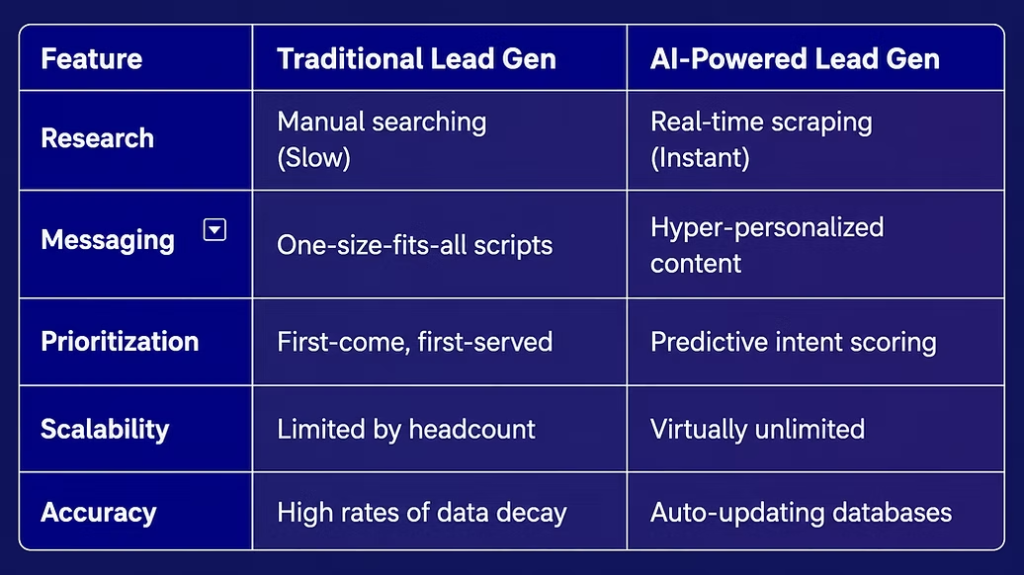
Comparison: Traditional vs. AI-Powered Lead Gen
Final Thought: Your AI Roadmap
To succeed in B2B LinkedIn marketing today, follow these three steps
- Audit your tools: Are you still using basic filters, or are you using intent-based data?
- Humanize your output: Use AI to draft, but use your voice to polish.
- Iterate constantly: AI learns from data. The more you use it and correct it, the better it becomes at finding your ideal customers.
The future of B2B marketing isn’t a battle of Human vs. Machine. It’s a partnership where technology handles the complexity, and humans handle the connection. Start integrating AI into your LinkedIn lead generation today, and watch your pipeline transform.
Frequently Ask Questions
What is the best way to start with AI for LinkedIn lead generation?
Start small. Use AI for content brainstorming and lead research before moving into automated outreach. Tools like Gemini or ChatGPT can help you draft hooks for your posts based on industry news.
Will AI replace B2B sales professionals?
No. AI replaces tasks, not people. It handles the boring parts—like finding email addresses and sorting data—so that sales professionals can focus on what they do best: building real human relationships and solving complex problems.
How does AI improve B2B LinkedIn marketing ROI?
AI improves ROI by reducing “wasted effort.” By identifying high-intent leads early, you spend less money on broad advertising and more time on high-value conversations that actually lead to revenue.
Is AI-generated content bad for SEO?
Not if it’s high quality. Search engines prioritize value and relevance. If your AI-generated content is helpful, well-structured, and provides unique insights, it will rank well. Always have a human editor review AI content to ensure it meets your brand’s voice.
Can AI help with Social Leadership for CEOs?
Absolutely. AI can monitor industry trends and suggest “thought leadership” topics for executives. It helps busy leaders stay active on LinkedIn without needing to spend hours every day writing from scratch.