
In 2026, a B2B marketing budget is not just a list of costs; it is a growth engine that decides how many qualified leads, sales meetings, and revenue opportunities your company will create.
If you plan your budget around b2b lead generation marketing and b2b linkedin marketing, you can scale in a predictable and measurable way instead of guessing.
Define Clear Growth and Revenue Goals for B2B Lead Generation Marketing
Before deciding numbers, you must know what you want to achieve in 2026. Most B2B companies start by connecting revenue targets with lead and pipeline targets from their b2b lead generation marketing activities.
You can work backwards like this:
- Decide your annual revenue goal for 2026
- Decide what percentage of that revenue should come from marketing‑generated leads
- Calculate how many opportunities and leads you need to reach that revenue
Then you can ask: How much budget do we need to generate this volume of quality leads at an acceptable cost per lead?
Understand Your Current Funnel and Benchmarks
To make a realistic budget, you need your current data. Look at each stage of your funnel and the performance of earlier campaigns and channels.
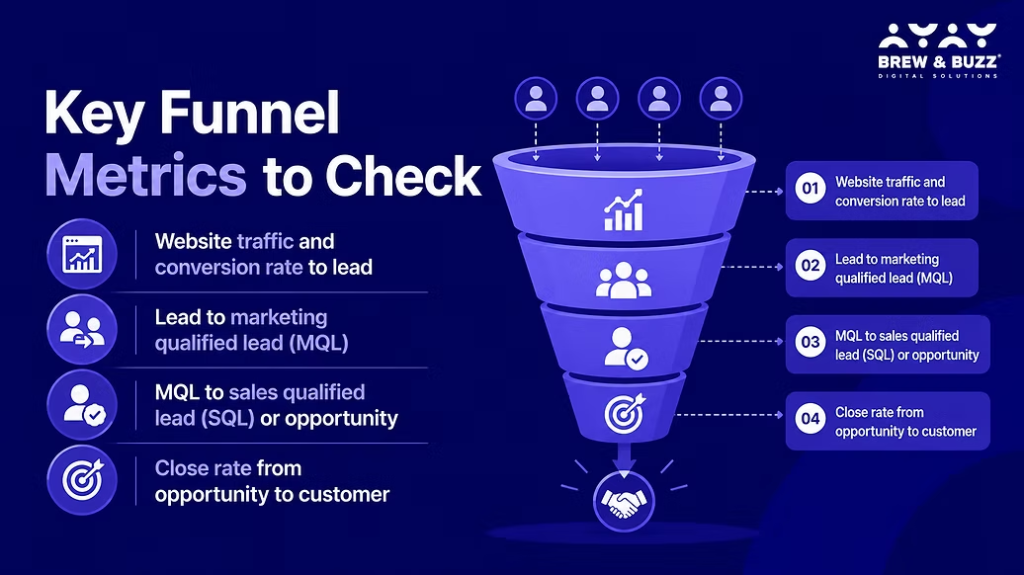
When you know these numbers, you can estimate how much traffic and how many leads you need from channels like b2b linkedin marketing, email, events, and paid search.
Prioritize High‑ROI Channels (including B2B LinkedIn Marketing)
In 2026, buyers research online, compare options, and trust peers more than ads, so you need a channel mix that reflects that behavior. For many B2B firms, b2b linkedin marketing is one of the highest‑ROI channels because it lets you target decision‑makers by job title, company size, and industry.
Common B2B budget buckets:
- LinkedIn Ads and organic b2b linkedin marketing (content, personal branding of founders/sales, company page)
- SEO and content for b2b lead generation marketing (blogs, guides, case studies, landing pages)
- Paid search (Google/Bing) for high‑intent keywords
- Email and marketing automation
- Webinars, virtual events, and industry conferences
- Partner, referral, and ABM campaigns
Your budget should give more money to channels that:
- Attract your ideal customer profile
- Generate qualified leads, not random traffic
- Have clear tracking and attribution
Decide the Percentage of Revenue to Invest in Marketing
Many B2B companies invest between 5% and 15% of revenue in marketing, but growth‑focused companies often spend more. Your exact percentage depends on your stage, competition, deal size, and how aggressive your 2026 growth target is.
Practical approach:
- Conservative growth: 5–8% of annual revenue
- Healthy growth: 8–12% of annual revenue
- Aggressive growth / new market entry: 12–20% of annual revenue
From this total marketing budget, you then allocate a clear portion to b2b lead generation marketing and b2b linkedin marketing, since those are directly linked to pipeline.
Break Down Budget by Channel and Funnel Stage
A scalable budget covers the full customer journey: awareness, consideration, and decision. Each channel should have a clear purpose and a target metric (leads, meetings booked, pipeline value, etc.).
Example breakdown:
- 25–35%: B2B LinkedIn marketing (ads + organic content + personal branding support)
- 20–30%: SEO, blog content, and lead magnets for b2b lead generation marketing
- 10–20%: Paid search campaigns
- 10–15%: Email, automation, and nurturing flows
- 10–15%: Webinars, events, and partnerships
- 5–10%: Experiments with new channels (podcasts, communities, influencer‑style B2B creators)
Make sure you plan:
- Media spend (ad platforms, sponsorships)
- Tools (CRM, marketing automation, analytics, intent data, creative tools)
- Human cost (in‑house team, agency, freelancers, designers, writers, video editors)
Use B2B LinkedIn Marketing as a Growth Engine
B2b linkedin marketing deserves its own section in a 2026 budget because LinkedIn is where many B2B decision‑makers actively network and learn. If used correctly, it helps both paid and organic b2b lead generation marketing.
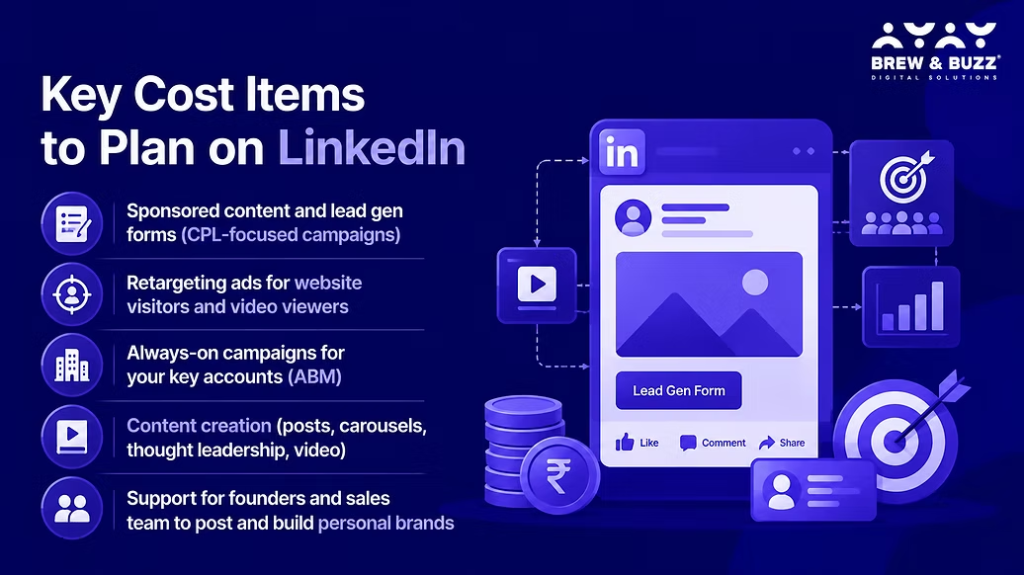
Track:
- Cost per lead and cost per qualified lead
- Meetings or demos booked from LinkedIn leads
- Pipeline and revenue influenced by LinkedIn
Budget for Data, Tools, and Measurement
You cannot scale what you cannot measure.In 2026, tracking is harder because of privacy rules, so your budget must include solid analytics, CRM, and attribution setups.
Common tool categories:
- CRM (e.g., HubSpot, Salesforce)
- Marketing automation (emails, workflows, lead scoring)
- Web analytics and call tracking
- LinkedIn tools (scheduler, creative, reporting)
- Data enrichment and intent tools
Allocate money and time for:
- Proper setup and integration
- Dashboard building
- Regular reporting and optimization meetings
Keep 10–20% of Budget Flexible for Experiments
A scalable B2B budget in 2026 is not fixed for 12 months; it is dynamic.
Keep 10–20% of your budget as flex so you can quickly move money toward what works and away from what fails.
Experiment ideas:
- New creative angles on LinkedIn ads
- Account‑based campaigns for a specific region or vertical
- Short video and thought‑leadership campaigns for founders
- Local language content to support b2b lead generation marketing in different geos
Frequently Ask Questions
How should a B2B company in India plan its 2026 marketing budget for scalable growth?
B2B companies in India often work with smaller ticket sizes but high volume, so budgets should strongly prioritize b2b lead generation marketing with SEO, performance campaigns, and b2b linkedin marketing targeting Indian decision‑makers. Because labor costs are lower, many Indian firms can invest more in in‑house content and outbound, while still running affordable ad campaigns on LinkedIn and search.
Does the budget split change for US, UK, or EU markets?
Yes, in regions with higher media costs (like the US or UK), you may need a higher overall budget percentage or a sharper focus on the channels with proven ROI, especially b2b linkedin marketing and targeted search. Local regulations and data privacy rules can also affect tracking and tools, so some extra budget may be needed for compliant data platforms.
How can a small B2B company in Asia Pacific or the Middle East start with a limited budget?
Smaller companies can start by investing more time than money: organic LinkedIn posting, founder branding, and SEO content for b2b lead generation marketing, supported by a small, highly targeted LinkedIn ad spend. As the first deals close and ROI is proven, they can slowly increase the percentage of revenue invested in marketing.