
B2B buyers no longer wait for a sales representative to educate them. By the time they schedule a demo, they’ve often compared competitors, read multiple articles, watched product videos, explored customer reviews, and even asked AI assistants for recommendations.
This shift has transformed content from a marketing asset into a revenue-driving business function.
A modern B2B content marketing strategy isn’t measured by the number of blogs published each month. It’s measured by how effectively your content answers buyer questions, earns trust, supports AI-powered search experiences, and moves prospects closer to a purchase.
If your content isn’t accomplishing those goals, you’re simply adding more pages to the internet, not creating business value.
In this guide, you’ll learn how to build a scalable content marketing system that combines strategic planning, automation, AI-assisted production, and programmatic SEO to generate sustainable organic growth.
Why Traditional Content Strategies Are Losing Effectiveness
Publishing one blog every week worked when search competition was relatively low, and buyers relied mainly on search engines.
Today’s reality is very different.
Potential customers discover brands through multiple channels simultaneously
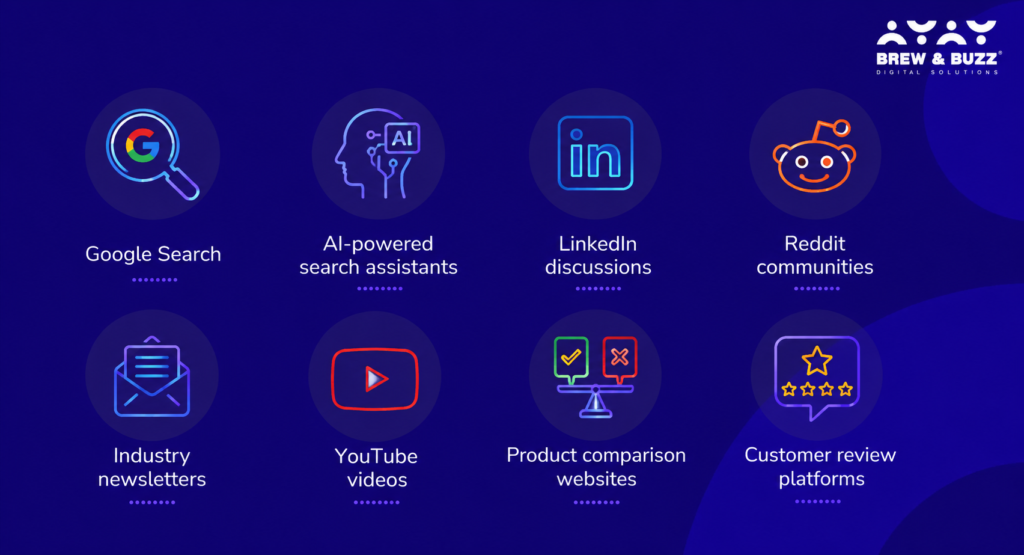
Because information is everywhere, your content must be connected, comprehensive, and genuinely helpful instead of existing as isolated articles.
Companies that continue producing random blogs without a larger strategy struggle to build authority or generate consistent leads.
Start With Business Goals, Not Keywords
Many organizations begin their content planning by looking for high-volume keywords.
That approach often creates traffic without conversions.
Instead, start by asking business-focused questions.
- What products or services generate the highest profit?
- Which industries are your priority?
- What challenges do prospects repeatedly mention during sales conversations?
- Which objections delay purchasing decisions?
- What information helps customers feel confident before requesting a demo?
Once these questions are answered, keyword research becomes much more purposeful because every topic supports a measurable business objective.
Content should help solve customer problems while naturally guiding readers toward your solutions.
Understand Every Decision-Maker in the Buying Committee
Unlike B2C purchases, B2B buying decisions usually involve several stakeholders.
For example, purchasing marketing automation software may require approval from:
- Marketing Manager
- Sales Director
- Operations Head
- Finance Team
- IT Department
- Company Leadership
Each stakeholder has unique concerns. A finance executive wants cost efficiency. A marketing manager wants better lead generation.
The IT department focuses on security and integrations.
Creating content for only one audience means missing opportunities to influence the complete buying committee.
Build a Content Ecosystem Instead of Individual Articles
Successful B2B companies rarely rely on standalone blogs.
Instead, they create interconnected content that guides buyers from awareness to purchase.
Think of your content as a library rather than a collection of unrelated documents.
Your ecosystem should include:
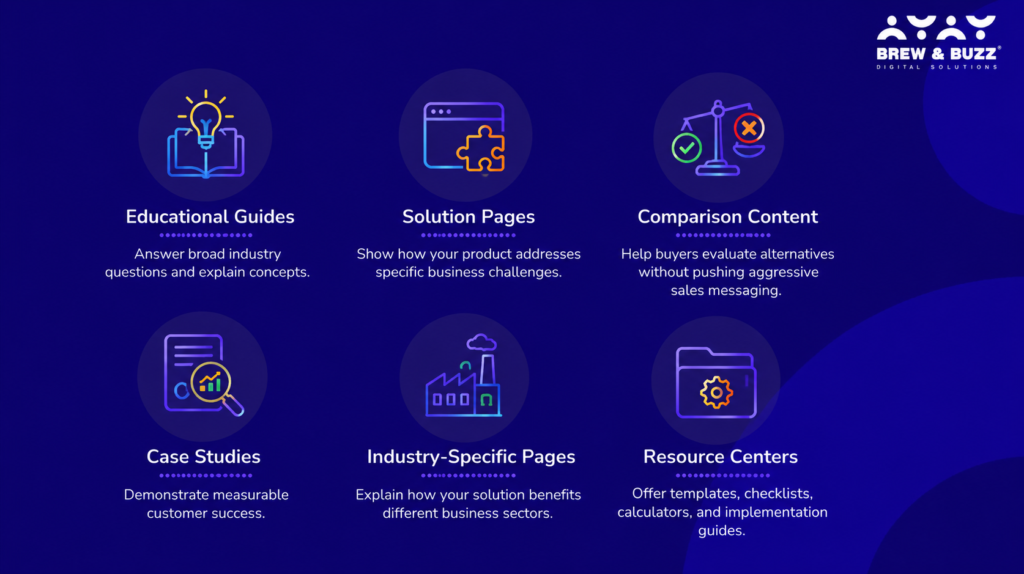
Together, these resources create a seamless learning experience that builds trust over time.
Design a Scalable Content Production System
Consistency becomes difficult when every article follows a different process.
Instead of reinventing your workflow each time, standardize production.
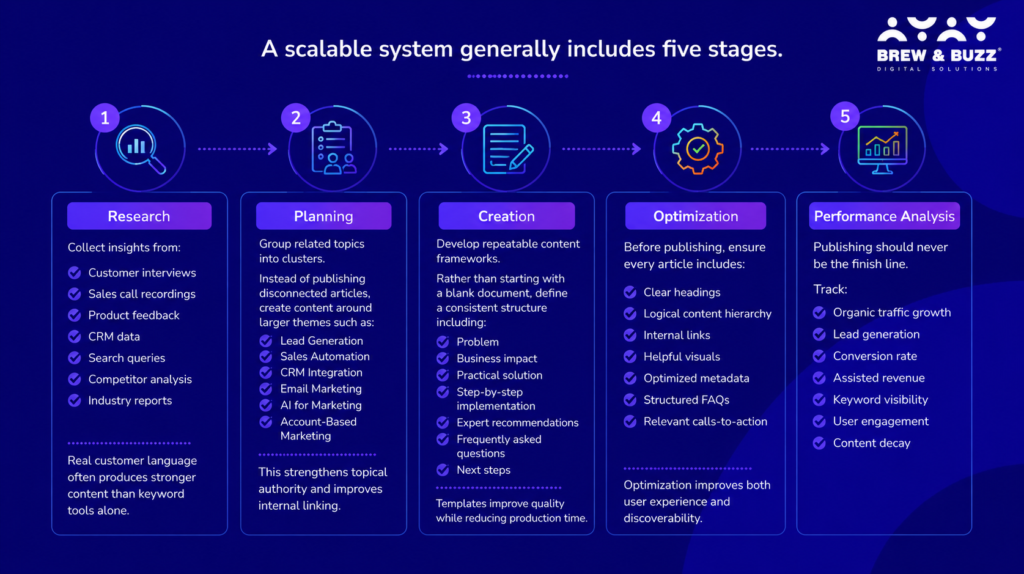
These insights reveal which topics deserve expansion or updating.
Using AI Without Losing Authenticity
Artificial intelligence has become an essential productivity tool, but relying on AI to generate complete articles without human oversight often results in generic, repetitive content.
The most successful marketing teams use AI selectively.
Examples include:
- Brainstorming content ideas
- Building outlines
- Summarizing research
- Creating first drafts
- Generating FAQs
- Improving readability
- Suggesting internal links
- Refreshing outdated content
Human expertise remains essential for adding original insights, industry knowledge, customer stories, strategic analysis, and nuanced recommendations.
The goal is not to replace writers but to help them work more efficiently while maintaining quality.
Create Automation Workflows That Scale
As your content library grows, manual processes become increasingly difficult to manage. Automation allows marketing teams to focus on strategy rather than repetitive tasks.
A typical workflow might include:
- Collect keyword opportunities automatically.
- Generate content briefs using AI.
- Assign drafts to writers.
- Review content through an editorial checklist.
- Publish directly to your CMS.
- Schedule social media promotion.
- Notify sales teams about new resources.
- Update reporting dashboards automatically.
This reduces operational overhead while ensuring a consistent publishing cadence.
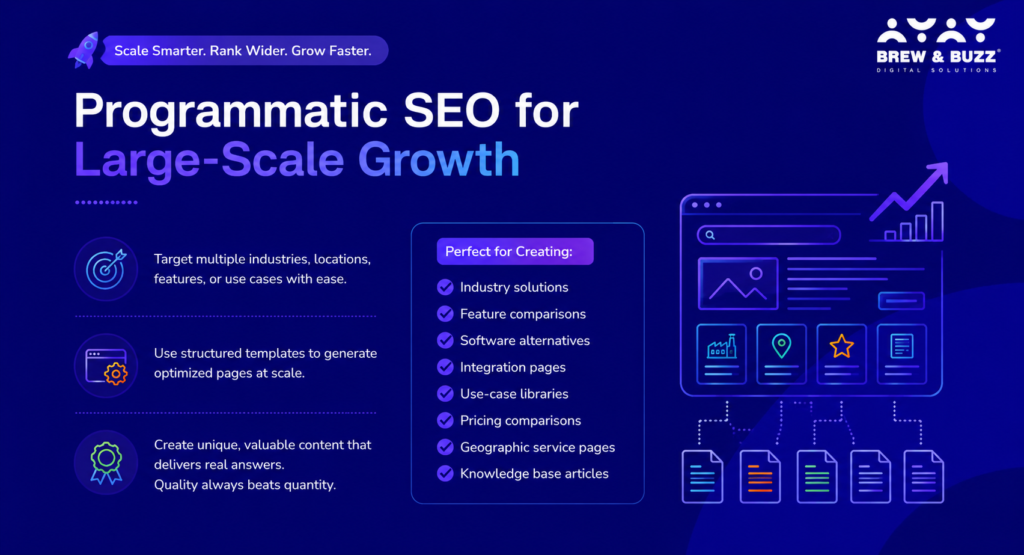
Programmatic SEO for Large-Scale Growth
Programmatic SEO is particularly valuable for businesses targeting multiple industries, locations, features, or use cases. Instead of manually creating hundreds of pages, structured templates can generate optimized landing pages at scale.
Examples include:
- Industry solutions
- Feature comparisons
- Software alternatives
- Integration pages
- Use-case libraries
- Pricing comparisons
- Geographic service pages
- Knowledge base articles
The key is ensuring every page provides unique, helpful information rather than duplicating the same content with minor keyword changes. Quality must always outweigh quantity.
Make Every Content Asset Work Harder
Creating a blog should be the beginning of your marketing efforts, not the end. One well-researched article can become:
- A LinkedIn carousel
- Several social media posts
- An email newsletter
- A webinar topic
- A YouTube script
- Short-form videos
- Infographics
- Sales enablement material
- Podcast discussion points
Repurposing extends the lifespan of every content investment while reaching audiences across different platforms.
Write for Humans and AI Search Engines
Search behavior is evolving. Many professionals now ask AI assistants to summarize information before visiting websites.
To increase your chances of being referenced:
- Answer questions clearly.
- Use descriptive headings.
- Support claims with evidence.
- Include original perspectives.
- Add structured FAQs.
- Keep information current.
- Demonstrate subject expertise.
- Maintain a logical page structure.
Content that is accurate, comprehensive, and easy to understand is more likely to appear in AI-generated responses.
Metrics That Truly Matter
Traffic alone doesn’t prove content success. Instead, evaluate whether your content contributes to business outcomes.
Focus on metrics such as:
- Marketing-qualified leads
- Sales-qualified leads
- Demo requests
- Customer acquisition cost
- Pipeline influenced
- Revenue attributed to content
- Conversion rate by content type
- Customer retention influenced by educational resources
These measurements provide a clearer picture of return on investment than page views alone.
Final Thoughts
Building an effective B2B content marketing strategy is no longer about publishing as much content as possible. It’s about creating a repeatable system that consistently delivers value to your audience while supporting measurable business goals.
When strategic planning, AI-assisted production, automation workflows, and programmatic SEO work together, your content becomes more than a marketing channel—it becomes a long-term growth engine.
Organizations that invest in scalable processes today will be better positioned to meet changing search behaviors, adapt to AI-driven discovery, and earn trust throughout the entire buyer journey. The result is not only stronger organic visibility but also a predictable pipeline of qualified leads and sustainable business growth.
Frequently Ask Questions
The success of your B2B content marketing should be measured by business outcomes rather than just website traffic. While page views and keyword rankings indicate visibility, they don’t always reflect real business impact.
Track metrics such as qualified leads, demo requests, contact form submissions, email sign-ups, conversion rates, sales pipeline influenced by content, and revenue generated from organic traffic. You should also monitor engagement metrics like average time on page, returning visitors, and content shares to understand how valuable your content is to your audience.
If your content consistently attracts the right prospects and contributes to sales opportunities, your strategy is delivering results.
The most effective B2B content addresses specific customer challenges and helps buyers make informed decisions. Content that provides practical solutions and supports the buying journey typically generates the highest-quality leads.
Some of the best-performing content formats include:
In-depth how-to guides
Industry-specific solution pages
Product comparison articles
Customer case studies
White papers and research reports
ROI calculators
Implementation checklists
Webinars and on-demand product demonstrations
Instead of creating content solely to increase traffic, focus on producing resources that answer important buying questions and encourage readers to take the next step.
Your content marketing budget depends on your business size, growth goals, target market, and the amount of content you plan to produce. Rather than viewing content as a marketing expense, consider it a long-term investment that continues to generate traffic and leads over time.
A typical budget may include:
Content strategy and planning
SEO research and optimization
Professional writing and editing
Graphic design and video production
AI content and automation tools
Content distribution and promotion
Performance tracking and analytics
Small businesses often start with a focused monthly budget and scale as they see results, while larger organizations typically invest in comprehensive content programs. The most important factor is maintaining consistent quality and measuring return on investment rather than simply increasing spending.
Yes, AI-generated content can rank if it is accurate, original, helpful, and demonstrates expertise. Search engines prioritize content quality rather than how it was created. Human editing, fact-checking, and unique insights remain essential for achieving strong rankings.
AI helps marketing teams automate repetitive tasks such as keyword research, content outlining, topic clustering, content optimization, metadata generation, and performance analysis. It increases productivity while allowing marketers to focus on strategy, creativity, and expert insights.